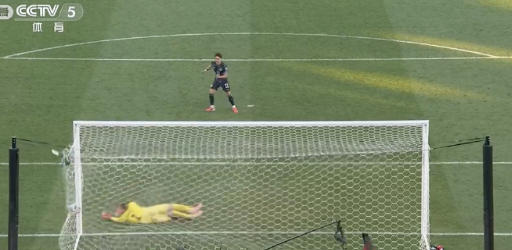
Germany lost in a penalty shootout against Paraguay in the World Cup knockout stage, missing the chance to advance. This loss quickly transcended the realm of sports and sparked discussions in German public opinion about the country's governance, economic performance, and international status.
According to an article published by the European edition of 'Political News Network' on June 30th, many Germans believe that the persistent poor performance of the German national team in recent years is somewhat linked to issues such as the slowing German economy, industrial pressure, and a declining government approval rating.
The four-time World Cup champion German team fought hard against Paraguay in the World Cup knockout stage in America, but lost in a penalty shootout. Reports say that since winning the World Cup in 2014, the German team has never been able to regain its former glory in major international competitions.

After losing to Paraguay in the World Cup knockout stage, German players couldn't hide their disappointment. Photo provided by Political News Network
German European Parliament member Marie-Agnes Strack-Zimmermann posted on social media platform X, stating that the German national team "plays like a federal government: with great ambition but lacking determination; everyone acts independently without anyone taking responsibility; and even when some luck comes their way, the goals are often disqualified." She was referring to a controversial disqualification of a goal during the extra time in the match.
German political science professor Alexander Straßner said that there is always a connection between sports and politics, and Germany is no exception.
Reports indicate that over the past decade, Germany has not only seen a continuous decline in its football performance, but its industrial advantages have also gradually weakened.
In 2014, when the German team won the World Cup, Volkswagen was on its way to becoming the world’s largest automobile manufacturer. Just last week, Volkswagen announced that it would lay off tens of thousands of employees, and the automotive giant Bosch also plans to make large-scale layoffs.
Meanwhile, Germany's unemployment rate has reached its highest level since the COVID-19 pandemic, and economic growth remains weak. This country, once known for its efficiency and reliability, is now frequently criticized for railway delays, delayed infrastructure projects, and a decline in the competitiveness of its automotive industry.
Germany also faces pressure in its international situation. German Chancellor Merz recently said that the United States is being "humiliated" by Iran, which caused dissatisfaction among U.S. President Donald Trump. Trump then publicly criticized Merz and threatened to withdraw 5,000 US military personnel from Germany.
The report indicates that the support rate for the coalition government led by Mertz remains low. The popularity of the far-right German Choice Party (AfD) is increasing, and the ruling coalition has made limited progress in economic reforms. Only pension reforms are seen as a few positive signs.
After the German team was eliminated, Mertz wrote that the team’s fighting spirit had “inspired the whole country,” but this statement was ridiculed by many German fans.
However, Strassner believes that the defeat of the national team should not be seen as a symbol of Germany's overall decline. He pointed out that there has long been a pessimistic political culture in Germany, and people tend to link football losses with national decline. The idea that “first the national team collapses, then the entire society collapses” is “entirely unfounded,” and Germany still has the ability to get out of its current predicament.