The small South Asian country of Pakistan has recently come under the spotlight on the international stage. On one hand, it acts as a mediator in the US-Israel conflict, moving between the two sides. On the other hand, it signed a Strategic Common Defense Agreement with Saudi Arabia, and has deployed military personnel and equipment to Saudi Arabia. Among these deployments are the F-16 fighter jets and the KH-9 missile system, which have attracted significant attention.
In terms of timing, the arrival of Pakistans troops coincided with the actual ceasefire between the US and Iran. Additionally, Pakistans close relationship with China, along with the equipment it used, along with Chinas red hands during the negotiations to end the war in Iran, all make it easy for people to draw connections between these events.
The Gulf countries policy of relying on U.S. security protection is facing difficulties. Maintaining an neutral image becomes unsustainable. Will Pakistans military presence in the Gulf serve as a stabilizing factor for this regions armed neutrality? Will China use Pakistans military presence to play a more significant role in matters related to the Gulf and the Middle East? A more specific question is: Does China need to accelerate the sale of J-35 fighter jets in order to enable Pakistan to take on important responsibilities during these major geopolitical changes?

On September 17, 2025, Saudi Arabia and Pakistan officially signed the Strategic Common Defense Agreement.
On September 17, 2025, Saudi Crown Prince Mohammed bin Salman and Pakistani Prime Minister Shahbaz Sharif officially signed the Strategic Common Defense Agreement in Riyadh. This agreement stipulates that any attack by a third party against either of the two countries will be considered an invasion of both countries. During the ongoing war with Iran, Pakistan has deployed troops to Saudi Arabia in accordance with the provisions of the SMDA. If necessary, the number of troops dispatched can be increased further. Under the SMDA framework, Pakistan can deploy up to 80,000 troops, and it is also possible to include naval vessels in this deployment.
SMDA is important for Saudi Arabia, as the defense environment in Saudi Arabia has become more complex in recent years.
As a base for Sunni Muslims, Saudi Arabia has long been the leading country among Sunni Muslim nations in the Middle East and the Gulf region. It has also maintained hostility towards Iran, which represents Shiite Muslims. Despite its substantial investments in weapons and military equipment, Saudi Arabia lacks confidence in its own military capabilities. Therefore, it relies on external forces to protect itself. The military sales and military presence of the United States and Europe in the Gulf are essentially driven by this perspective.
However, with the facilitation of China, Saudi Arabia and Iran reached an agreement on normalizing relations in Beijing on March 10, 2023. Diplomatic relations were immediately restored, and the security cooperation agreements signed in 2001, as well as the economic, trade, and investment agreements signed in 1998, were activated once again.
On the other hand, on September 9, 2025, Israel carried out an air strike on Doha, killing a Hamas leader. This shows that the threat to Gulf countries sovereignty comes not only from Iran, but also from Israel. The US military is transparent regarding its actions against Israel, and advanced military equipment from the US and Europe doesnt solve the problem. Rumors of a rebel trigger are also constantly circulating.
During the war with Iran, the presence of American forces not only failed to serve as a effective deterrent, but instead became a powerful magnet that attracted Iran to counterattack. American bases in Saudi Arabia were subjected to fierce attacks from Iranian missiles and drones. However, Iran remained restrained from attacking non-American targets. In addition to its strong protests, Saudi Arabia did not launch any armed counterattacks. Saudi Arabias security dilemma during this war with Iran is not unique; many countries in the Gulf region face similar problems.
Currently, as ceasefire negotiations between the United States and Iran are ongoing, Saudi Arabia hopes to establish a non-aggression treaty between Gulf countries and Iran, similar to the Helsinki Accords from the Cold War era. NATO and the Warsaw Pact served as military guarantees for European peace during the Cold War. However, the Helsinki Accords became a political foundation for European peace, establishing mechanisms for peace and dialogue. They also opened up opportunities for cultural exchanges and increased mutual trust. If the Gulf Helsinki Accords can be implemented, then Gulf peace will also have a similar political foundation.
Currently, countries like Saudi Arabia and others in the Gulf region have maintained restraint after being attacked by Iranian forces. This has helped prevent the situation from escalating into a full-blown war, which is in the interests of the world. To some extent, this aligns with the principles and spirit of the Beijing Agreement.
In this situation, it seems logical to replace the U.S. military presence in the Gulf with Pakistani military forces, and shift the target from Iran to Israel.
IMPORTANT: Please return only the English translation. 
Importantly, Pakistan, as a Muslim nuclear power, operates both outside the Gulf region and within the Muslim community. It also maintains good relations with the West, as well as having special close ties with China. During the Iran War, Pakistan took the initiative to mediate between the United States and Iran, leading to several rounds of negotiations. Although these negotiations still failed to produce reliable and lasting results, the situation in the Strait of Hormuz remained unresolved during the war. Shipping operations could not return to pre-war levels. However, large-scale military actions between the two sides were effectively halted. Both parties also remained open to continuing negotiations.
The strategic differences between the United States and Iran are too significant. There is no common ground regarding key issues such as Irans nuclear program, control over the Strait of Hormuz, and Irans relations with anti-Israel forces in the Middle East. Its not surprising that negotiations failed to yield any results. Trump threatened several times to resume military action, but ultimately he refrained from taking impulsive decisions. He also prevented Netanyahu from continuing the conflict by putting pressure on him to stop further hostilities.
The claims that Irans religious forces will fall apart if their leaders are executed, and that Irans nuclear efforts can be destroyed by ground bombs, are completely false. Trump has no interest in being tricked or suffering further losses. The war with Iran has become a bitter decision that the United States cannot avoid. As a businessman who keeps failing but still continues to try, Trump understands the importance of cutting losses and avoiding further damage.
Netanyahus political life is in jeopardy. First, its Gaza; now, its Iran. War has become a means for him to hang on by a thread. But without the support of the United States, or at least their acquiescence, Netanyahu is unable to continue the war. At least, he cannot sustain long-term, large-scale operations.
In this context, Pakistans military presence in the Gulf has played a significant role in maintaining peace and stability. Pakistans F-16 fighter jets have become the first air force units involved in peacekeeping operations in history. However, this peacekeeping effort does not contribute to maintaining peace between the United States, Israel, and Iran. Instead, it serves to maintain peace between Saudi Arabia and these two nations. In other words, Pakistan operates more like an armed neutral party. The ceasefire between the United States, Israel, and Iran is neither facilitated nor guaranteed by this situation.
Peacekeeping and peace enforcement are fundamentally different. Peacekeeping involves situations where both parties in conflict agree to cease fire, but a neutral third party is needed to intervene and ensure the ceasefire. The role of this third party is limited to self-defense when someone acts recklessly; it does not require any actual combat capabilities. In other words, it operates like a police force.
The latter refers to situations where both parties involved in the conflict do not voluntarily agree to a ceasefire. In such cases, a third party intervenes with military force to force both parties to accept the ceasefire. The intervention of the third party requires sufficient military strength, so that it can prevail over the party that refuses to accept the ceasefire. In other words, what is needed at this point is combat capabilities.
Armed neutrality means not supporting either side in a conflict. It involves resisting invasions from all parties, including both passive invasions and full-scale invasions. This also requires actual combat capabilities.
Its easy for large nations to maintain armed neutrality. After all, no nation dares to offend others lightly. Small nations often desire armed neutrality as well. However, achieving this under the pressure of confrontations between large nations is conditional. Cooperative armed neutrality means that warring nations are willing to respect the armed neutrality of smaller nations that act as barriers. Non-cooperative armed neutrality requires a country to be able to withstand the full force of invasion from larger nations. Generally speaking, its not small nations that can achieve this.
Historically, Switzerland was a successful example of armed neutrality. It remained neutral during both World Wars, as it could avoid conflicts with Belgium. Belgium, on the other hand, was a failed example of armed neutrality. It suffered greatly during both wars, as it was inevitably involved in conflicts. The main route for US-led attacks against Iran involves passing through Lebanon, Syria, and Iraq. The US military bases in the Gulf serve only as combat support facilitiesproviding aerial refueling, early warning, and anti-missile defenses. As long as Lebanon, Syria, and Iraq remain unguarded, it is possible for Gulf countries to adopt a Swiss-style form of armed neutrality. In other words, its possible to achieve a cooperative form of armed neutrality.
Pakistans military presence in the Gulf serves a cooperative, armed-neutral role at this stage. It is only meaningful when both the United States, Israel, and Iran are willing to respect such armed neutrality. Although Pakistan has a military force of 8,000 personnel, it is still far from sufficient to achieve non-cooperative armed neutrality, let alone enforce peace.
The United States and its allies have significantly more military forces deployed in the war against Iran. However, they were unable to defeat Iran using force alone. Iran also possesses much stronger countermeasures, especially in terms of missiles and drones. Similarly, these countermeasures failed to defeat the United States and its allies. In the foreseeable future, even if Pakistan increases its military presence, it will still be unable to defeat the United States or Iran. Cooperative neutrality is the only way for Pakistan to maintain its military presence in the Gulf region.
But for some people, the expectation is that Pakistan can play a role in maintaining peace in the Gulf region. And this is done under the condition that Israel is unwilling to pursue peace. The statement China should accelerate the sale of the J-35 is made in this context. Its necessary to counter Israels advantages with F-35 aircraft, as well as to curb Israels military ambitions. However, it must be said that this approach underestimates Pakistans capabilities, and it doesnt reflect any real geopolitical realities.
The reality of the Iran war shows that Irans goal is to eliminate the presence of US forces in the Gulf region, but it is not a civil war within Islam. On the other hand, Israel poses a threat to the sovereignty of Gulf countries, but its goal is also not military conquest of those countries. In some ways, the security dilemma faced by Gulf countries is somewhat like the sword is pointed at the enemy, yet the real target is not the enemy itself. The enemy in this context is Americas interests, while the enemy for Iran is its own interests. Gulf countries themselves are not the targets. However, geographical realities mean that this situation is a dangerous situation where both the US and Iran are involved in a conflict that is impossible to avoid.
If Israel launches a large-scale aerial attack and forcibly opens a passage to Iran, then the Gulf countries, along with Pakistans air force, may not have the ability to repel Israels aerial attacks.
Israeli Air Force currently has:
66 F-15A/C/E aircraft, along with another 50 F-15EX aircraft, have been ordered.
173F-16CBlock 4052
48 F-35A aircraft, with another 52 aircraft already ordered.
In the Gulf region, Saudi Arabia currently has:
72 Typhoon aircraft
81 Tornado jets
232 F-15C/D/E/EX fighter jets, of which 15 are used for training purposes.
The United Arab Emirates have:
44 F-15 2000
80 units of Cougar aircraft have been ordered.
55 F-16E Block 60 aircraft
Qatar has:
30 aircraft of the Mirage model; additionally, 6 two-seater aircraft are used for training purposes.
20 aircraft of the Typhoon model; another 4 aircraft are double-seater models and used for training purposes.
48F-15QAF-15EX
Obviously, aside from not having fifth-generation aircraft, the strength of the Gulf Air Force, as described in documents, is at least comparable to that of Israel. They have a sufficient number of aircraft and advanced technology levels. However, during the Israeli air strikes on Doha, neither the Saudi Arabian nor the Qatar Air Forces responded. This has raised doubts about the combat capabilities of the Gulf Air Force. Additionally, there are persistent rumors suggesting that American and European fighter jets (as well as air defense systems) in the Gulf region may be in a rebel mode.
Its another factor to consider. In the incident where Kuwaiti pilots downed three American F-15E jets, the Kuwaitis were former U.S. Navy pilots. The entire situation remains unclear, but if its known that they were fighting against the Americans and Israelis, then the loyalty of those former U.S. Navy pilots becomes questionable. In fact, from pilots to commanders and technicians, the Gulf Air Force relies heavily on mercenaries, many of whom come from Europe and America.
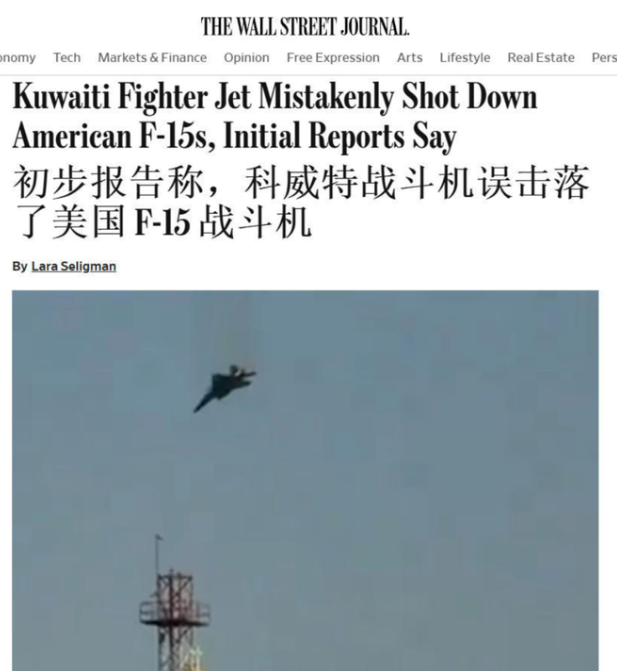
In early March, American media reported that a Kuwaiti Air Force F/A-18 fighter jet had downed three American F-15E fighters.
In Pakistan, the current situation is as follows:
75 F-16 aircraft, most of which are outdated Block 15 MLU models; only a small number are Block 52 models.
20 J-10C fighter jets
176Block 1/2/38Block 3
The Pakistan F-16 not only has an older design, but it is also not allowed to be used for overseas operations according to military procurement regulations. The J-10C demonstrated its capabilities during the 57 Air Battle, but its numbers were limited. The F-16 is Pakistans main aircraft for air combat. The main task of the Pakistani Air Force remains to defend against India. The number of troops that can be deployed to the Gulf is limited.
The US militarys global deterrence operates in this way. Most of its forward positions serve merely as decoys. Its true strength lies in its powerful ability to provide reinforcements during wartime. However, even if Pakistan is willing to receive significant reinforcements from the Gulf region during wartime, despite the threats from India, there are still issues involved.
During wartime, Pakistani fighter jets cannot fly across Iran and Afghanistan to reach the Gulf. Pakistan also lacks sufficient air and maritime capabilities to support long-term operations in the Gulf region. Supplies of food, fuel, and bases may not be a problem, but ammunition, equipment, and spare parts must still be transported from Pakistans territory.
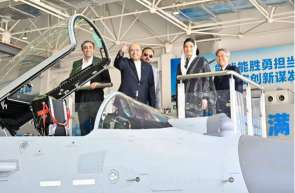
On September 14, 2025, the Pakistani Presidents office announced that President Zardari had become the first foreign head of state to visit the Chengfei Aircraft Industry Group in China. He also took a photo with the J-10 fighter jets.
A more serious issue is coordinating operations. Integrating forces from the Gulf under Pakistans unified command involves not only political issues, but also personnel and organizational challenges.
Its not really a big issue regarding pilots. Many pilots of the Gulf Air Force come from Pakistan, and they are essentially mercenaries from Pakistan. When the United States sold F-16E aircraft to the UAE, whether those pilots were from Pakistan or not wasnt really a big deal. At that time, Pakistan was also subject to U.S. sanctions due to nuclear explosions it had suffered.
However, air operations require strict, coordinated, and skilled command. Its not enough for pilots to simply be their own people. They must also be organized within a unified, coherent, and well-functioning command structure. Among the 100,000 troops stationed in Europe and America, combat units are in the minority; most are command and support units. The U.S. European Command essentially acts as NATOs supreme command. During wartime, it not only commands its own troops and reinforcements but also the allied forces of NATO member states in Europe. It also coordinates the operation of complex logistics systems to support operations throughout the entire theater of war.
The US military forces in the Gulf region are similar. The Fifth Fleet headquarters in Bahrain is merely a ceremonial unit with very few permanent troops. However, it operates under the command of the entire US military force.
Pakistan lacks such organizational structures, human resources, and operational experience. The Gulf Air Force is even more lacking in these aspects. Historically, it was only during the Gulf War that Pakistans air force operated under the unified command of the U.S. Central Command. In the foreseeable future, any coordination between Pakistans air force and the Gulf Air Force will be like having various warlords temporarily handing over their forces to a single commander. Given Israels well-organized and experienced air force, Pakistans disadvantages are obvious.
A more specific issue is the confrontation between the F-35 and the J-35. The difference in technical performance isnt the main problem; the real issue lies in the difference in numbers. Israel already has 48 F-35A jets, and it is currently purchasing an additional 52 units. Pakistan also only has 20 J-10C jets. Recently, two J-10C jets with unknown serial numbers were spotted. This could indicate that more J-10Cs are on the way. The J-35, however, remains just a myth that wont ever become a reality.
In theory, the Gulf Air Force has enough fourth-generation and fifth-generation fighter jets to be under unified command. All that is needed is for Pakistan to deploy J-35 fighters to counter Israels F-35 aircraft, thereby establishing an air balance. The problem is that even if China starts selling its J-35 fighters, it will still take a long time for Pakistan to achieve a comparable number and combat readiness of J-35 fighters compared to Israels F-35s. If Pakistan wants to maintain enough J-35 fighters to counter India, the number needs to be doubled at least. Even with substantial funding from Gulf countries, this would still be an unbearable burden for Pakistan, and it would also put tremendous pressure on Chinas production capacity.
Another issue is that the Gulf countries themselves are not united. During the war in Iran, Israel, the UAE, and India formed a delicate axis of cooperation, while Turkey, Saudi Arabia, and Pakistan formed an opposing axis.
Saudi Arabia and the UAE are both Gulf countries. During Yemens civil war, both nations initially worked together to counter the Houthi forces. However, their differences became more apparent during the Iran-related conflicts. The UAEs withdrawal from OPEC is a clear example of this.
The UAEs senior officials are more Western in their mentality and approach to national governance. They also seem to be more open-minded when it comes to issues related to Israel. In August 2020, during the Trump 1.0 era, the UAE became the first country to sign a peace agreement with Israel. During the war with Iran, according to a report by Xinhua News Agency in Jerusalem on May 12th, U.S. Ambassador to Israel Huckabay confirmed that Israel had deployed its Iron Dome air defense system and related personnel in the UAE. This would be the first time in history that Israel has deployed its military forces in a friendly Arab country. On May 13th, Natanaihus office announced that Natanaihu had secretly visited the UAE during the war with Iran and met with UAE President Mohammed bin Zayed. However, the UAE denied this claim.
During the war in Iran, the UAE faced the greatest damage from Irans attacks. Due to the presence of American interests in the UAEboth military and commercialthe UAE was forced to take countermeasures. They even considered joining forces with the US and Israel to defeat Iran. However, they were unable to do so because no one was willing to support them.
Saudi Arabia is, first and foremost, the guardian of orthodox Islam (i.e., the Sunni faction). It tends to be cautious regarding issues related to Israel. After the war in Gaza, the process of implementing Abraham Protocol 2.0 has essentially come to an end. Saudi Arabia focuses more on diplomacy and dialogue, aiming to de-escalate tensions and restore normalcy to the situation in the Gulf region. It does not seek to change or even destroy Iran. The Khalij Agreement in the Gulf region is, therefore, the logical next step.
Bahrain, with 70% of its population being Shiites, and Kuwait, which borders Iran, are both uneasy about the escalating conflict. Qatar has always claimed to be a bridge between the West and Iran, and tends to support Saudi Arabias position. Oman, adhering to its tradition of neutrality, also tends to support Saudi Arabias stance.
From the perspective of Iran, it is also beneficial to reach some kind of Helsinki Agreement with the Gulf countries. Iran has too many enemies, who are very powerful. Theres no need to add more enemies right at its doorstep. The conflicts between Shiites and Sunnis have persisted for thousands of years and cannot be resolved completely. However, they can be managed. This is precisely the meaning of the Beijing Agreement.
Tactically, if the Gulf Helsinki Agreement is achieved, the airspace of countries like Saudi Arabia should be closed off for US and Israeli military operations. The Gulf bases would also not be used for combat support purposes such as aerial refueling, early warning, mine clearance, or patrols along the straits. This would significantly reduce the military pressure on Iran.
Improper military pressure could force Saudi Arabia and Pakistan to activate the SMDA mechanism. Instead, this would only encourage Iran to provoke Pakistan with military actions in both the Gulf and Baluchistan regions. However, if the conflict in the Gulf spreads to Baluchistan, it becomes a situation where using a long stick to scare wolves causes both sides to be afraid. Pakistan certainly doesnt want any incidents occurring in Baluchistan or even in Afghanistan.
In other words, geopolitical realities do not require Pakistan to take on the burden of maintaining non-cooperative armed forces or even enforcing peace. Pakistan is unable to do so. In such circumstances, it doesnt make much sense for China to accelerate the sale of J-35 fighter jets to Pakistan, as this would only serve to further complicate the already complex situation in the Gulf region. Not to mention the additional complexities that would arise from the tensions between India and Pakistan.
Promoting peace and avoiding conflict serves the interests of the Gulf countries and Iran. This is precisely the best way for Chinese-style global governance to be applied in this region of long-standing conflicts. Pakistans military presence and Chinas role should be understood within this context. Pakistan will eventually receive the J-35 fighter jets, but their use against Israel is not their main purpose.

